The valve is the brain of a shower — it mixes hot and cold, holds a set temperature, and feeds the showerhead. The style you choose determines how much of the plumbing you see, how long installation takes, and what happens if it needs servicing five years down the line. Here's a practical look at both.
What's actually different?
The water mixing and control work the same way in both types. The difference is entirely about where the body sits:
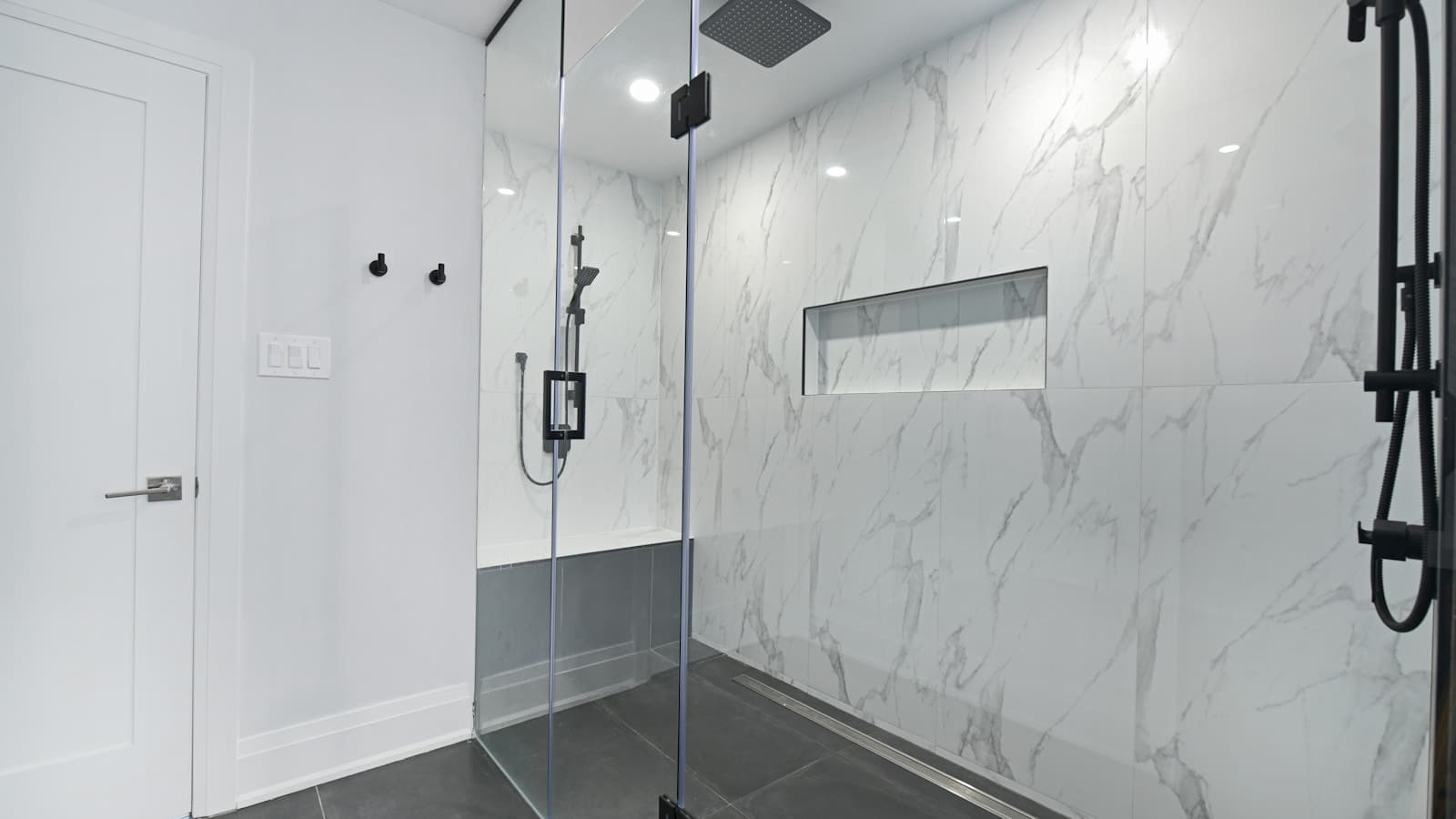
- Concealed — the valve body is hidden inside the wall. Only a trim plate with handles shows. Pipes run behind the tiles.
- Exposed — the valve body sits on the surface of the wall with the pipework visible (sometimes chromed and styled to look good).
Concealed shower valves
Pros
- Clean, minimal look. Only the control plate is visible — great for modern, streamlined bathrooms.
- Nothing to catch on in the shower space (handles sit flush, no pipes to knock).
- Easier to keep clean (less surface area to scrub).
Cons
- Installation is more invasive. The wall has to be cut into to recess the valve body — easy during a new-build or full refurb, but significantly more work if you're just swapping out an existing exposed valve.
- Servicing is harder. If the valve cartridge needs replacing, you access it through the trim plate. It's not as bad as it sounds — most Mira, Hansgrohe and Grohe concealed valves are specifically designed for cartridge-only servicing without pulling the whole body out — but check the spec sheet before buying.
- Tile decisions are locked in. Once tiled over, you can't easily move or re-route the pipes.
See our concealed shower range.
Exposed shower valves
Pros
- Much simpler to install. No wall-cutting, no chasing pipes. Ideal for retrofits, rentals, or DIY fits.
- Easy to service. Everything is accessible without taking tiles off.
- Cheaper overall when you factor in fitting time — plumbers can install an exposed valve in a fraction of the time a concealed one takes.
- Traditional and industrial styles specifically showcase the exposed pipework as a design feature.
Cons
- More surface area to clean. Pipes and valve body collect limescale in hard-water areas.
- Takes up more visible space in the shower enclosure, which matters in small bathrooms.
- Pipework is at chest height — children can catch themselves on it in family bathrooms.
See our exposed shower range.
Cost — honest picture
The valves themselves cost similar amounts — a quality concealed Hansgrohe or Mira thermostatic valve sits in the same price bracket as an equivalent exposed one. The difference is installation:
- Exposed on an existing wall — typically half a day of plumber time
- Concealed in a new install or tile-off refurb — similar to exposed, because you'd be tiling anyway
- Concealed retrofit into a tiled wall — usually a full day or more, plus tile removal and re-tiling
That retrofit scenario is where the maths often tips — swapping a failed exposed valve for a new exposed valve is a morning's work; swapping it for a concealed one rips up the whole wall.
Thermostatic vs manual — more important than exposed/concealed
Both styles come in thermostatic or manual versions. Thermostatic is strongly recommended. It holds the set temperature even if someone flushes the toilet or turns on another tap — preventing scald risk. Part G of the UK Building Regulations requires anti-scald protection on new bathroom hot water installs, which thermostatic valves provide. Read more about Part G requirements on GOV.UK.
How to choose — the 30-second version
- New build or full refurb, modern style: concealed
- Rental property or quick turnaround: exposed
- Swapping an old valve like-for-like: match what's there (exposed-to-exposed is trivial; exposed-to-concealed adds a day)
- Traditional / industrial bathroom style: exposed, chosen for looks
- Small ensuite where space matters: concealed to keep the enclosure clear
How we can help
Bathroomfort stocks both concealed and exposed shower valves from the major UK-trusted brands. Every valve on the site ships with free standard UK delivery, our Lowest Price Guarantee, and a 365-day returns window. If you're unsure which valve will match your existing plumbing and pressure, get in touch before you order and we'll check compatibility with you.