Small UK bathrooms — the under-the-stairs cloakroom, the ensuite in a new-build, the awkward original bathroom in a Victorian terrace — share the same constraint: every millimetre counts. The good news is that the last decade has given bathroom designers plenty of compact fittings that don't feel compromised. Here's what actually works, in the order you should tackle it.
Start with the layout, not the fittings
The biggest space gains come from rearranging what's where, not buying smaller things. Three layout moves, in rough order of impact:
- Swap the bath for a shower. A walk-in shower enclosure needs 800–900mm depth; a bath needs 1500–1700mm. If you're the sole user and never take baths, the footprint saving is transformational. Browse our shower enclosures.
- Move the door swing outward (or fit a pocket / sliding door). An inward-swinging door eats 700 × 700mm of floor space that can't hold anything. Changing to outward or sliding gives you a usable corner back.
- Rotate the toilet if it's currently against a wall where a vanity would also go. Facing the toilet into the short axis of the room often gives you a whole wall free for a basin unit.
These changes usually need a plumber (moving the soil stack is not trivial), but the space savings are huge. Sketch the layout before you commit.
Wall-hung everything
The single biggest visual trick in a small bathroom is getting floor space exposed. Wall-hung fittings achieve that without you actually losing anything:
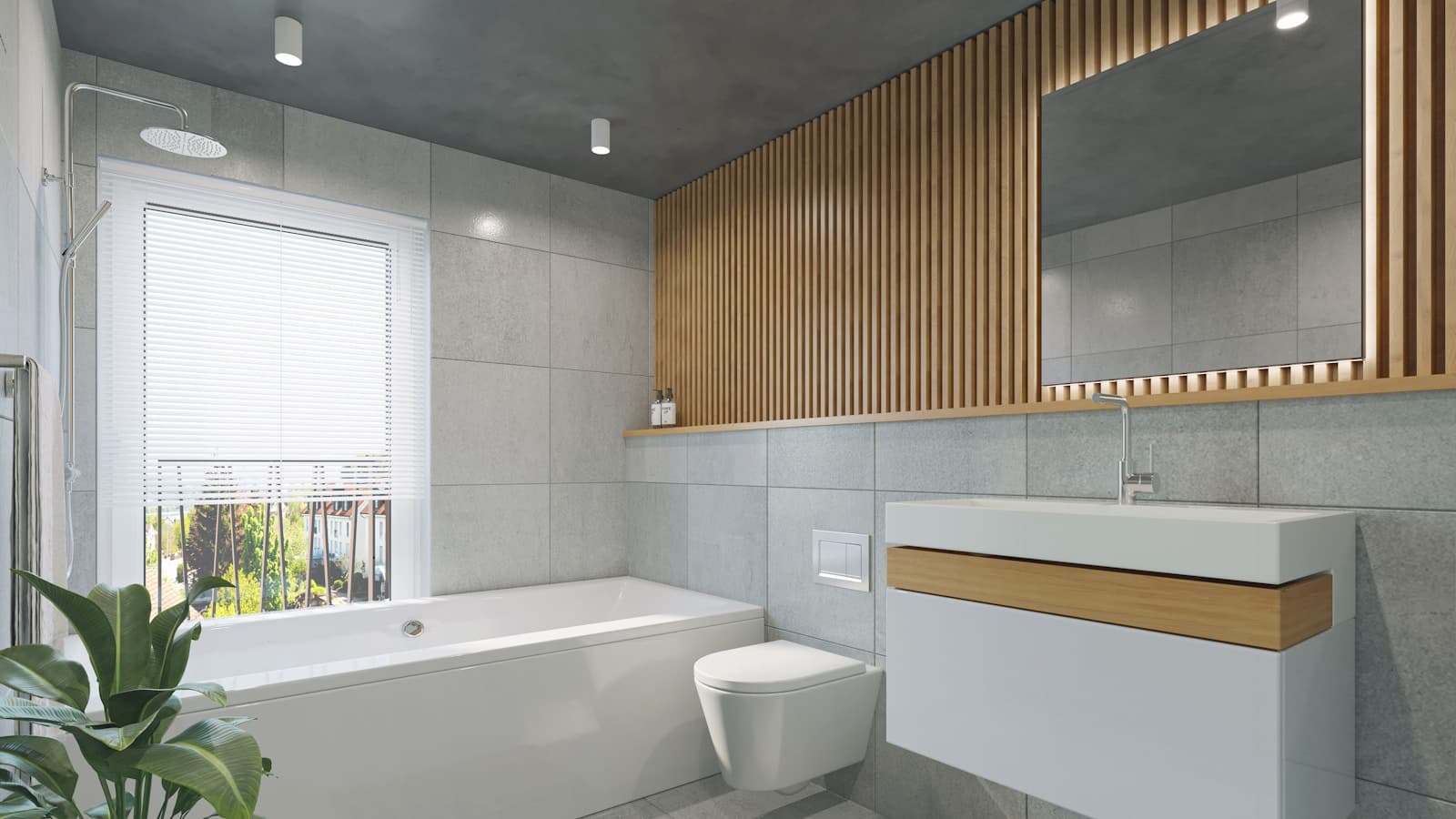
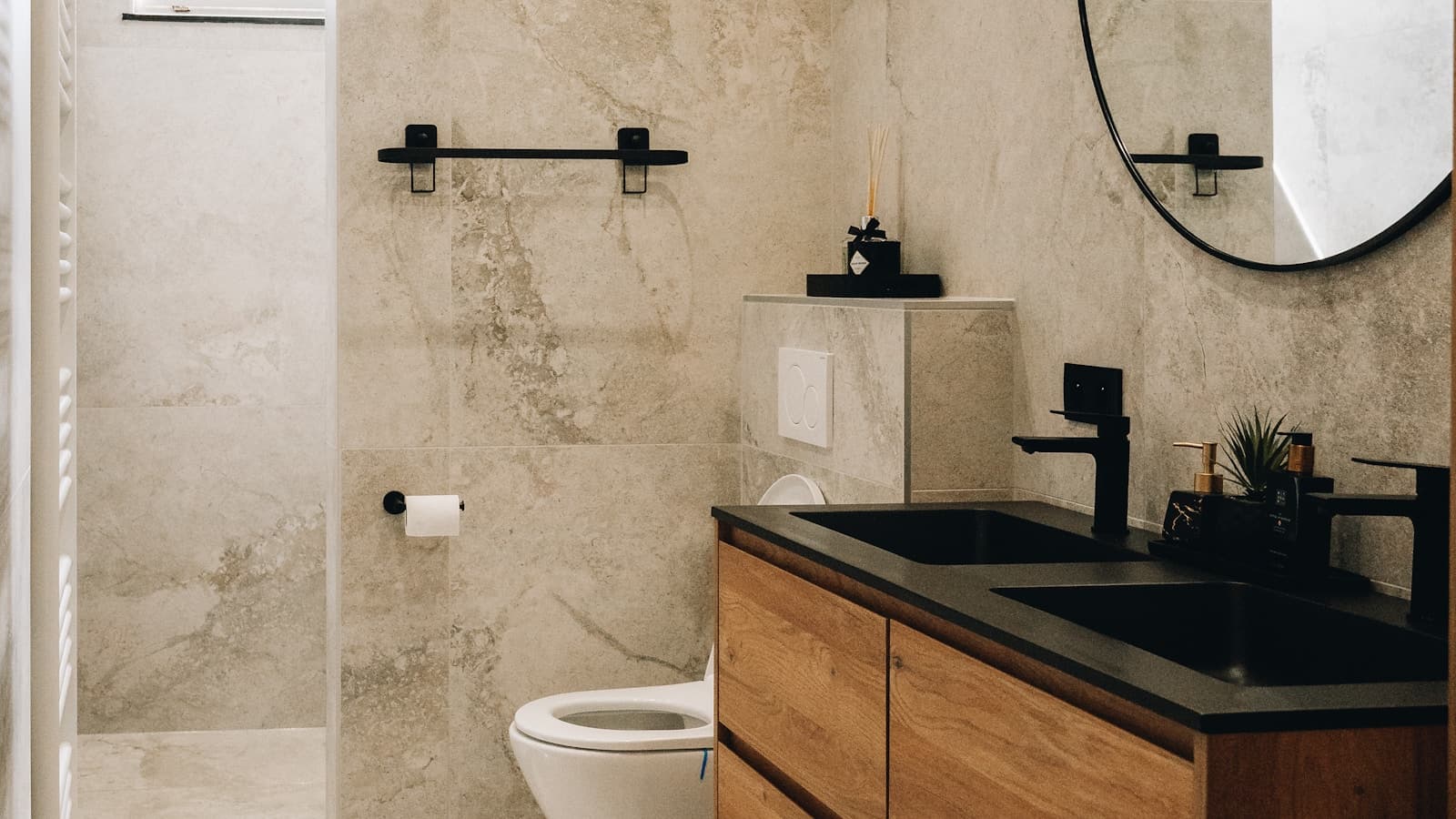
- Wall-hung toilets. The cistern hides behind the wall in a concealed frame (Geberit, Roca, Ideal Standard all make them). The pan projects out at a comfortable height. You gain ~200mm of visible floor depth compared to a close-coupled unit. See our toilet range.
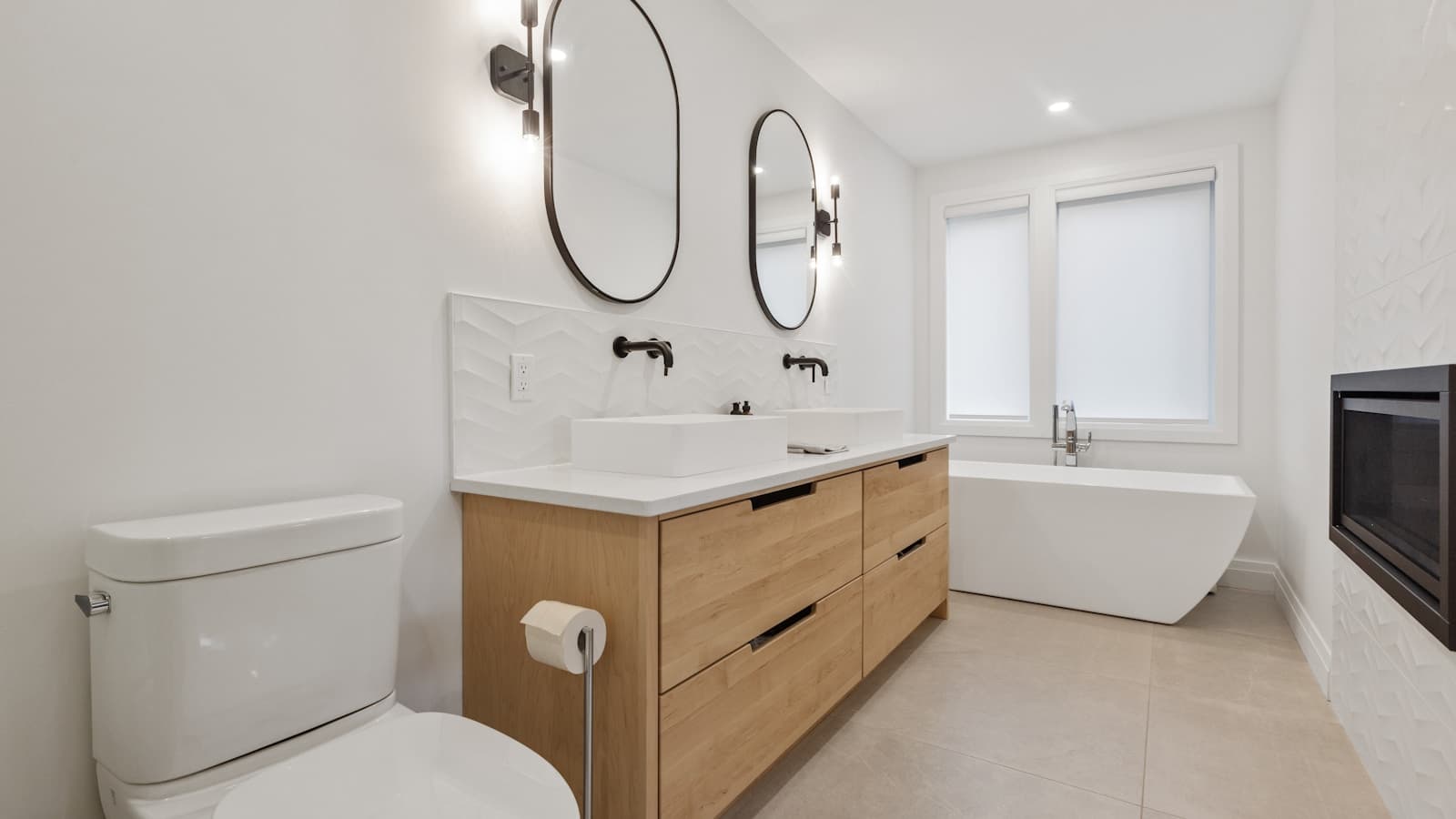
- Wall-hung vanity units. Same principle — the storage cabinet floats above the floor so you can see the tile beneath, which reads as more space. Browse wall-hung vanities.
- Wall-mounted taps. Mounting the tap on the wall rather than the basin frees up the basin surface and lets you fit a shallower, smaller unit underneath.
Compact fittings that don't look like compromises
Manufacturers make specifically-sized “cloakroom” and “compact” ranges that used to feel cheap but are now genuinely well-designed:
- Cloakroom basins at 300–450mm wide — small enough for a corner, big enough to actually wash hands in
- Short-projection toilets at 600–620mm from the wall (standard is 680–720mm)
- Compact baths at 1400mm or 1500mm for flats where a full 1700mm bath won't fit but you still want bathing capability
- Slim-line radiators that mount high on the wall without projecting into the room
- Countertop basins that mount on a narrow shelf rather than a full cabinet
Visual tricks that actually make a difference
These are the cheaper, higher-impact moves to do after the fittings are in:
Use one tile throughout
A single tile on floor and walls visually expands the room — the eye doesn't trip on a boundary at skirting level. Large-format tiles (600×1200mm) work particularly well because the grout lines are minimal.
Mirrors — big, and low-positioned
A single large mirror above the vanity doubles the apparent depth of the wall. Mirrored cabinets are even better because they add storage without adding visible bulk.
Light temperature and direction
Warm white LEDs (2700K–3000K) make surfaces feel softer; daylight white (4000K–5000K) makes colours feel accurate but the room feel more clinical. For small bathrooms, warm white + two light sources (ceiling and above the mirror) beats one bright overhead.
Frameless shower screens
A clear frameless bath screen or walk-in panel disappears visually, whereas a framed enclosure chops the room in half. For cost-sensitive projects, semi-frameless (chrome-trimmed edges only) is a middle ground.
Storage without bulk
- Recessed niches cut into studwork — store shampoo and conditioner without them sitting on a shelf
- Mirror cabinets double as storage
- Over-toilet shelving uses dead vertical space
- Vertical heated towel rails function as both heat and towel storage
What not to do
- Don't install a shower over a bath in a very small bathroom — the shower curtain or screen eats circulation space every time it's used
- Don't fit a dark tile on every surface — dark bathrooms feel smaller, regardless of what Pinterest shows
- Don't buy a corner bath to save space — they take up as much floor area as a standard bath, just at an awkward angle
- Don't skip the extractor fan for fear of “using space” — small bathrooms get humid fast, and untreated moisture costs you more in re-painted ceilings than any fitting saves you
A starting point
For a small UK bathroom, a proven combo is: wall-hung toilet + compact vanity (500–600mm) + walk-in shower enclosure + single large wall mirror. All these components are available across the Bathroomfort catalogue from brands like RAK Ceramics, Ideal Standard, Mira and Grohe, with free UK delivery and our 365-day returns policy. If you'd like help sizing a specific layout, contact our team — share your floorplan and we can suggest fittings that fit.