Wall-hung or floorstanding — the decision feels like pure aesthetics, but there are real practical differences that matter over the life of a bathroom. This guide walks through the installation demands, cleaning implications, storage capacity, and style outcomes so you can pick the one that genuinely suits your space.
The core difference
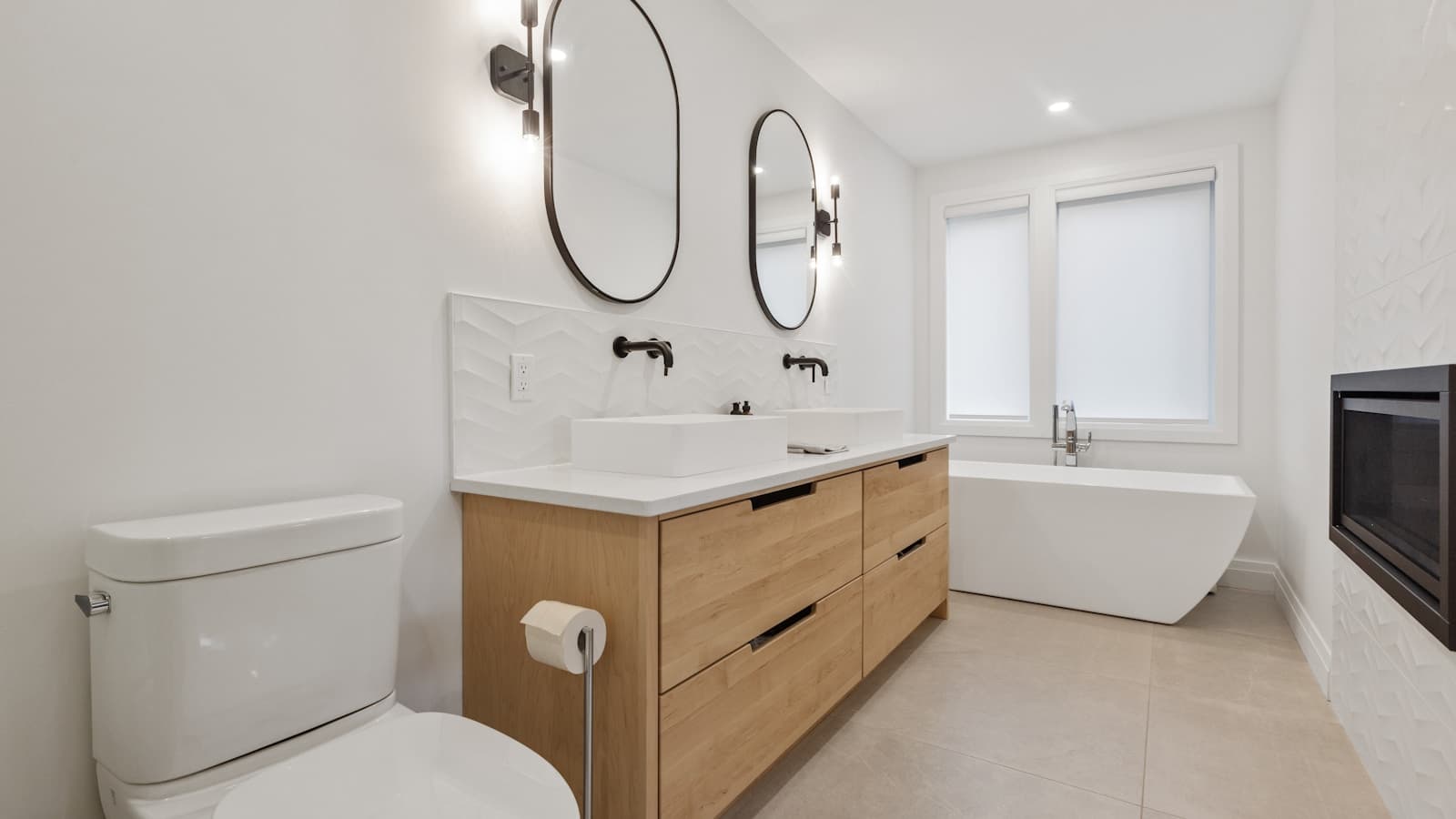
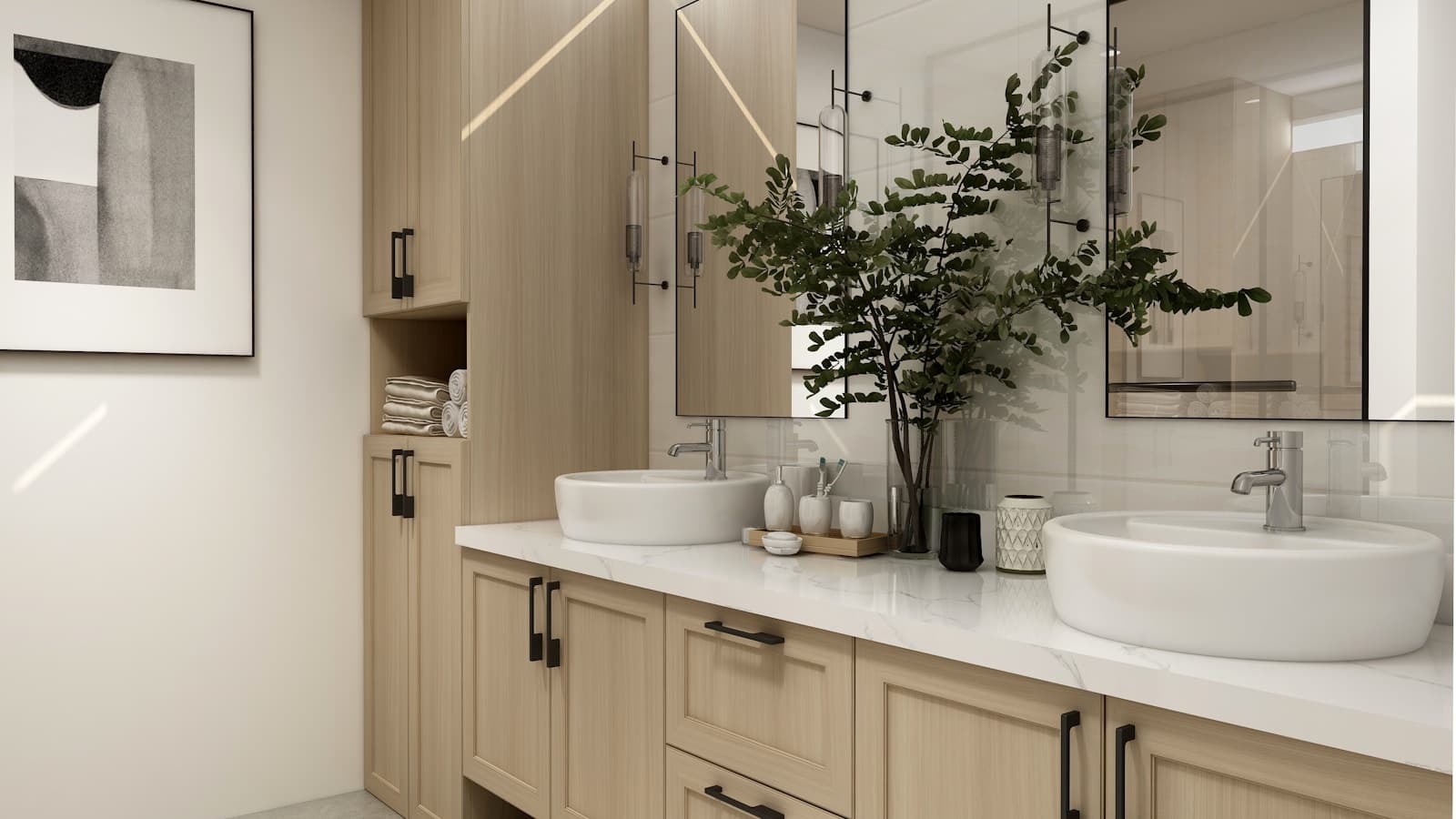
Floorstanding vanities sit on the floor — either on a plinth, short legs, or directly on the tile.
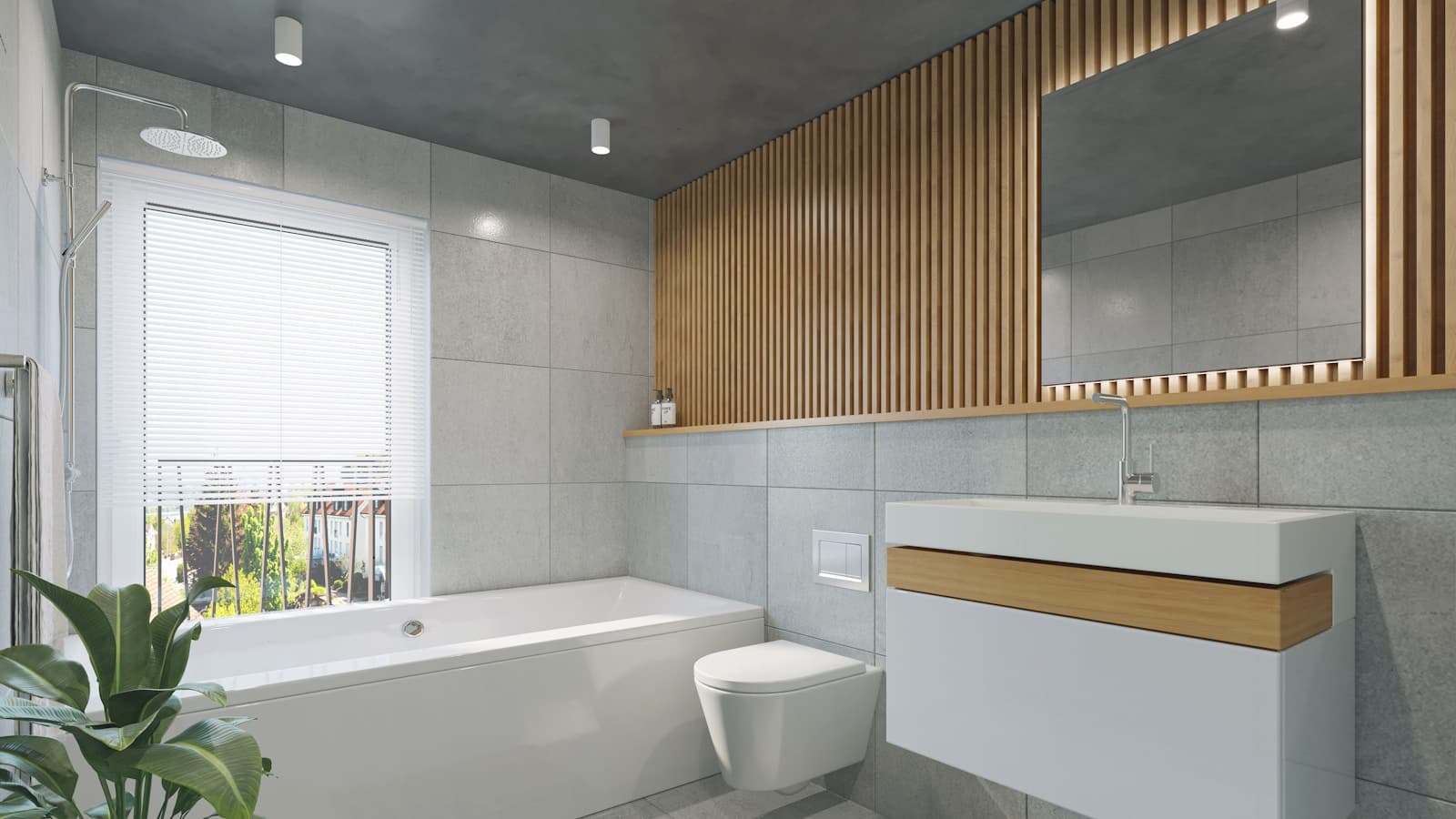
Wall-hung vanities mount on brackets fixed into the wall, floating clear of the floor by anywhere from 150mm to 450mm.
Both styles carry the same basins, drawers and doors internally. The choice is structural, not functional.
Installation: what each demands from the wall
Floorstanding — forgiving
- Sits on the floor, which bears the load — the wall only holds it upright
- Levelling is straightforward (adjustable feet or a shimmed plinth)
- Works on any wall type: stud, masonry, plasterboarded
- Hides uneven skirting and slightly out-of-level floors
Wall-hung — requires solid fixings
- Carries all the weight (unit + basin + water + storage contents) on two or four wall brackets — typically 80–120 kg when loaded
- Stud walls need strong wooden noggins behind the plasterboard to bolt into. If the wall is plasterboard-only, fitting is not safe without adding noggins first.
- Masonry walls are generally fine with heavy-duty wall plugs, but dot-and-dab plasterboard over brick can be tricky — the fixings need to reach the solid wall, not just the plasterboard
- The back wall must be very flat — any bow or curve shows because the unit sits proud with nothing to absorb it
If you're in doubt about whether your wall can take a wall-hung unit, ask your plumber or an installer to check before ordering.
Cleaning
This is where wall-hung wins clearly.
- Wall-hung — mop underneath the unit with no obstruction. Skirting dust never settles behind it. If the floor slopes (older UK houses often do), water runs freely rather than pooling against a plinth.
- Floorstanding — the base collects dust, hair and the occasional toothpaste drip. Toe-kick plinths are particularly annoying to clean around.
For families with small children, or anyone who hates cleaning, the wall-hung cleaning advantage compounds over years.
Storage
Slight edge to floorstanding, but less than you'd expect.
- Floorstanding can use the full internal height because it's supported from below. Useful for tall bottles, cleaning supplies.
- Wall-hung gives up 100–200mm of internal height to leave clearance under the unit. You can still fit drawers, a shelf and most toiletries.
Practically, unless you're storing very tall items, both offer plenty. Consider what you actually keep in your current vanity before worrying about the difference.
Style and perceived space
A wall-hung unit makes the bathroom feel bigger because the floor remains visible from wall to wall. A floorstanding unit visually occupies its full width of floor. In a small bathroom under 4m², wall-hung is almost always the better visual choice. In a larger bathroom where you want a grounded, traditional look, floorstanding carries more weight.
Tile choice amplifies this: if you've spent on a beautiful floor tile, a wall-hung unit shows it off. If the floor is unremarkable, the difference matters less.
Cost
The vanity unit cost is usually similar. Variations come from:
- Wall-hung adds fitting time if noggins need to be added to a stud wall — add half a day of carpenter or plumber time to the job
- Floorstanding may need scribing if your floor or skirting is wonky — less common, but possible
- Skirting removal is sometimes needed for wall-hung to look clean (the unit shouldn't sit in front of the skirting)
The decision in one sentence each
- Small, modern bathroom with solid walls → wall-hung
- Larger, traditional bathroom or uneven floors → floorstanding
- Plasterboard walls without noggins, limited budget → floorstanding
- You hate cleaning → wall-hung
- You store tall cleaning products or lots of towels → floorstanding
A note on basin type
Both styles support all basin formats — inset, semi-recessed, countertop. A countertop basin on a wall-hung unit creates a particularly clean look (unit + slim worktop + basin on top). Countertop basins on floorstanding units work well too but can push the overall height up to 900mm+, which is taller than the UK standard 800mm counter height.
Ready to browse?
Our vanity range includes both wall-hung and floorstanding units from Roca, Ideal Standard, RAK Ceramics and more — sized from 300mm cloakroom units to 1500mm twin-basin units. All ship with free standard UK delivery, kerbside tracked on bulkier units, and our 365-day returns window. If you'd like help deciding whether your wall will support a wall-hung fit, contact our team before you order.